
Tramston logo

SpacePOS

PricingContact Us
Product
Developers
Company

Prerequisites

  • Welcome
  • Environment Setup
  • Guidelines

Architecture

  • Vdfs
  • Libraries
  • Objects
  • Nodes
  • Explorer
  • Spaces
  • Database
  • Jobs
  • Locations
  • Preview Media
  • Search
  • Sync
  • Tags
  • Actions

Clients

  • Cli
  • Rust
  • Javascript

Technology

  • Open Source
  • Tech Stack
  • Publishing Updates
  • Spacepos Releases
  • ​rspc
  • Spacepos Runtime & Sync
  • Spacefuel Grpc

P2p

  • Overview
  • Usage
  • Spacepos P2p
  • Spacepos P2p Proto
  • Spacepos P2p Block
  • Spacepos P2p Tunnel
  • Discovery
  • Local Network Discovery
  • Relay
  • Transport Layer
  • Protocols
Product
Developers
Company

Prerequisites

  • Welcome
  • Environment Setup
  • Guidelines

Architecture

  • Vdfs
  • Libraries
  • Objects
  • Nodes
  • Explorer
  • Spaces
  • Database
  • Jobs
  • Locations
  • Preview Media
  • Search
  • Sync
  • Tags
  • Actions

Clients

  • Cli
  • Rust
  • Javascript

Technology

  • Open Source
  • Tech Stack
  • Publishing Updates
  • Spacepos Releases
  • ​rspc
  • Spacepos Runtime & Sync
  • Spacefuel Grpc

P2p

  • Overview
  • Usage
  • Spacepos P2p
  • Spacepos P2p Proto
  • Spacepos P2p Block
  • Spacepos P2p Tunnel
  • Discovery
  • Local Network Discovery
  • Relay
  • Transport Layer
  • Protocols
DevelopersArchitectureDatabase
Architecture

Database

Schema

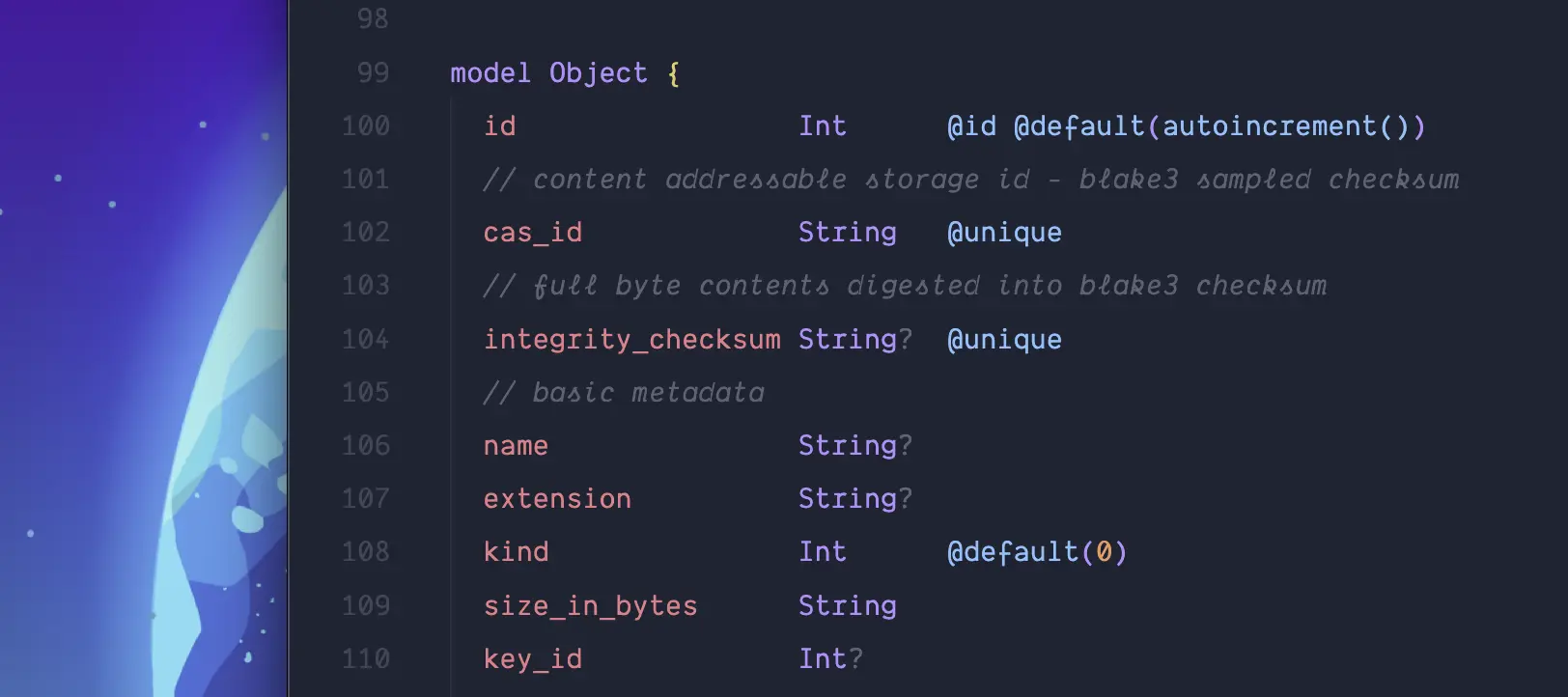
Our data schema is defined using Prisma, you can view it on GitHub. A cool screenshot of the Spacedrive schema
Prisma Client Rust

We use Prisma Client Rust as a database ORM, it allows us to use Prisma to define our schema and generate migrations based on modifications to that schema.

Migrations

Migrations are run by the Prisma migration engine on app launch.

Database file

The databases file is SQLite and can be opened in any SQL viewer.
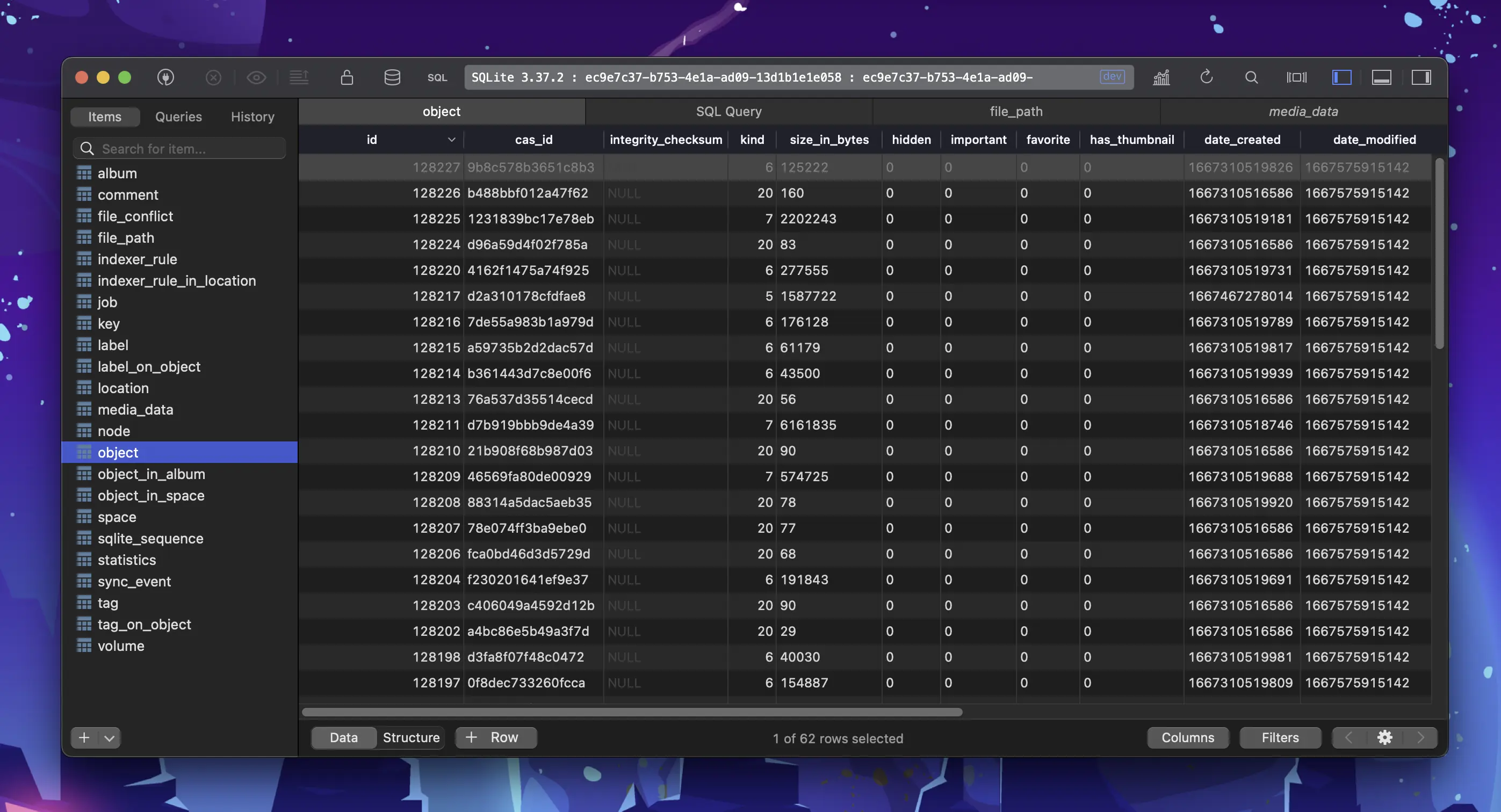
A Spacedrive library database file open in Table Plus

Edit this page on GitHub
Next article: Jobs
footer gradient

SpacePOS

© Copyright 2026 Tramston

Downloads

macOSmacOS IntelWindowsLinux
AndroidiOS